Showing posts with label writing. Show all posts

Tuesday, February 28, 2012

Painting Your Characters into a Corner: 5 Ways to Deal


Okay, writers, let’s talk about The Corner. You know what I mean. That place no writer wants to go, much less his/her characters. That awful, dark, trapped place that you’ve led your protagonist to and where you’ve abandoned him/her with no window, no ladder and no idea on how to get out of there. What’s a writer to do??

Well, I don’t have a magic bullet (although, if your character has to shoot his way out of a maximum security prison, magic bullets do help, implausible though they may be) but I do have a few thoughts on how one might get your hero out of the jam you’ve put him in. Unfortunately, there’s not a lot of magic to it.

1. Don’t Panic. Do Review Your Plot
There’s been a whole lot of writing that has led up to this corner. Go back and review your story up until now. Look for hidden clues that might give you a solution. You might have subconsciously written a piece of dialogue that allows for a minor secondary character to come in and help your hero save the day. If you don’t see any clues, then go back and write them in! Maybe you want to leave a certain piece of equipment lying around that might help out the character, or an abandoned road that gives an alternative getaway. Those ‘clues’ should only be mentioned in passing through dialogue or description before the unsolvable situation – just little nuggets of information – that you can pull out later when you need your character to break away from the corner.

2. Go Over Your Main Character’s Personality Traits and Motivation/Goals
Ask yourself, how would your hero react to this situation? Would he do something out of character here? Why? Would desperation make him do that? If your painted corner is really desperate, it might be enough to make that character do something (a criminal act??) that they might not have done before. Especially if his motivation/goals are strong enough to drive him forward from one painted corner into another one. But make sure if he’s going to do something that rebellious or desperate that you have set it up or hinted at that potential. And be prepared to live with the consequences! The reader must believe that your quiet, mousey hero has shown something (like running in front of a car to save his neighbour’s cat) early on in the story to then not be too surprised that when something he cares about is in danger his adrenaline starts to pump and it’s not too far a stretch to believe he will jump down a ravine to save the girl he loves.

3. Write/Outline Different Options for Resolution
No matter how crazy they seem or how far-fetched write those ideas down! See where those options might take you. I know this goes against many pantsers methods but brainstorming solutions (whether on your own or with others) is not the same as writing a complete outline. It can be very loose process and might just give you the spark/idea you need to move forward. Sometimes, the solution you come up with might take your character to another corner (that’s what just happened to me in this WIP). If that’s the case, don’t despair. Think of corners as a naturally escalating the conflict in your story. Escalating conflict is a Good Thing. How many corners can your character get out of? Too many and it becomes unbelievable (unless you’re doing a thriller where problems should be stacking up one after another throughout the book). Just don’t worry if you have more than one corner. Where one solution exists, so will another one.

4. Let Your Characters Sit in the Corner for Awhile
Walk away from the WIP. Sometimes your brain needs to digest the problem for a bit. If you stare at the scene every day and are getting more frustrated than inspired, it will not only paint your character into the corner, you’ll end up building a brick wall around him with barbed wire on top.

Walk. Away. Muse on it.

Let your brain do its weird story telling magic. Think about ALL the characters you’ve written. What are they doing when your hero is in that corner? Does a sub-plot create an opportunity to resolve what’s happening in your hero’s corner? Is there something/someone unexpected or underused until now that might create a disruption/surprise to the plot? If you’re surprised the reader will be too. Again, that's a Good Thing.

Finally

5. Don’t Despair! The Corner Can Be a Good Place
Remember when you were a kid, or when you, as a parent, send your kid to the corner, that it was not just about punishment? It was to allow for a Time Out. It was a place to think about all you (your character) had done to get you to there and to think about how to act from that point on. The same can be said when you paint your character into a corner. It is an opportunity to see if your story and your characters are acting the way they should or if you need to re-evaluate their behaviour and if their actions need to change in order to move their story forward in a positive, satisfying way.

What other suggestions do people have for making that corner less frustrating for writers? Let me know!

Wednesday, February 1, 2012

A Journey of a Thousand Words

I took a tremendous leap forward yesterday. I wrote 1,205 words. I'm not talking about revising old ones. I'm talking brand spanking new ones.

Big deal, you say. What's a measly 1,200 words? Well, when you haven't written a new word in months it is a very big deal, my friends. At least for me. For a lot of reasons, the last several months have seen me do everything and anything except write. I can blame it on a number of things and I have. All legitimate reasons for not writing. Seriously, my life outside of writing is a huge, messy, time-consuming vortex right now that has been sucking all creativity out of me. I have not been in a happy writing place as a result.

But no matter the excuse, the only way to pull yourself out of that place is by doing one thing: writing that first new word. But I also know that it can't just be any writing for any story or situation. I have been struggling to find the right story, the right characters that I care enough about, that are strong enough to pull me out of my messy vortex of life. I found that story this week when I began re-reading something I'd started a few years ago and stopped mid-way through. I was reading that story again, enjoying it and the characters when it suddenly stopped. Dang it. I wanted to know what happened to these people! I was mad at myself for stopping this story all those years ago. I remember I stopped writing it right around the time I was getting interest in Illegally Blonde and was getting distracted by submission/agent/editor stuff. I'd also heard of a slightly similar story premise that had just been published. Between the IB action and that irritation of hearing about a story like mine (which turned out to be nothing like mine) my writing flow on this story was interrupted enough to make me put it aside. Well, stupid me.

I have always wondered why I don't throw away the half-finished (or half-started, depending on your point of view) stories that sit on my computer hard drive (or scribbled in my journals). Now I know. They are waiting for the right (write?) time to be finished. They sit, their characters waiting for me to face the next page, to fill it with one word, then two, until I string enough of them together to start leading the characters through what will be their world.

The journey of a thousand words begins with one word, true. But it also must continue day after day until you reach the end. If I do a thousand words a day for the next 30 days I will, hopefully, reach that end. I wrote 1,664 words today. Let's hope this story and these characters continue to keep me away from the vortex.

Tuesday, January 24, 2012

Show Don't Tell - Truth or Lie??

I've been reading a lot of articles lately about writing advice and how, like any advice, much of it should be taken with a grain of salt (I need to look that up and see why salt is used in this cliché). See this piece by Nick Mamatas. Hilarious and makes the point that a writer needs to do what he needs to do and don't let the so-called rules constrain you. I agree with much of it but I do think writers just starting out should be aware of these pieces of advice and follow them at first. When they are more comfortable in their writing voice then they can determine how much of that advice, if any, they should take. Still, at some point, a writer will be faced with one of these rules, like 'Show Don't Tell', and have to decide whether they will break it.

In my case, I was always a firm believer in the 'show don't tell' piece of advice. Why on earth would a writer choose to drone on about what a tree looked like when they could have their main character climbing the tree, feeling the rough bark beneath his fingers and balancing precariously on a low hanging branch? Well, I did believe this advice until I wrote THE BREAK and I had two major scenes where, in effect I was telling rather than showing.

Oh, my God, I worried over those scenes. I kept thinking: "Is there any way to reveal this information without a character just talking about it?" Well, since that information happened in the past, I would have had to have a flashback and I really don't like flashbacks. Flashbacks are another thing some writers advise to keep to a bare minimum if used at all. I guess that's one piece of writerly advice I've kind of stuck with but, since cutting myself some slack on the show don't tell advice now, I figure that one is also ready to be blown up. I'll probably have a flashback scene in my next book, for all I know! As for 'show don't tell, I finally accepted that sometimes in a story (as in life) characters tell another character about something that happened to them. Talking reveals information, characters react to that information and (here's the big thing) if it is DONE WELL a reader will not feel like the information is revealed in a flat, boring way. I really hope I did those 'telling' scenes well. Time will tell (agagaga!!)

In fact, in a book I'm reading now called "World War Z", the entire story is told in a 'telling' way because the format is based on interviews about events that occurred in the past during the zombie war. The writer still manages to make the telling compelling even though it reads like a historical document based on interviews. But because those interviews are filled with complex, flawed characters that went through a horrific experience the stories they are telling are never boring. Very different and very well done.

I guess the moral of this is that the more you write, the more so-called 'rules' you come across and the more comfortable you become in breaking those rules when you need to in order to tell (show??) the story. Writing is not mathematics (thank God). There are instincts that must be listened to, rules that sometimes need to be broken and, most importantly, a story that needs to be told in the way the writer feels works the best.

How about you? Have you broken any of the so-called 'rules' of writing?

Tuesday, November 8, 2011

The Book is the Thing

I've been writing for nine years now. Not a great long stretch of time when you think of writers like Stephen King who started writing his stories as a young boy and he's in his 60's now or Nora Roberts who has been writing over 30 some years now(sorry, I'm too tired tonight to Google and find out exactly how long she's been at the game). I'm wondering if it's just me or if this happens to all writers at a certain point, no matter how successful they are:

There comes a point in your writing process where you finally realize that the book is the thing.

Not the agent.
Not the publishing contract.
Not a launch party.
Not pretty covers.
Not how many sales you've made (or haven't made).

Those things are the wrapping that's around the actual present. THE BOOK.

I was wondering why, since I parted ways with my agent earlier this year, I haven't been angsting about what's coming next. I'm not panicking about whether I've got a book to go out on sub right this very second. I'm not freaking out over the ever shrinking book shelf space or the lack of reviewers out there. I'm not stressing over whether I'll find another agent or get another publishing contract. I'm not worried about whether I'm tweeting or facebooking or blogging enough. I have finally, blessedly, come to the realization that all of those frets and worries and stressors and strains do very little to help get the real work of writing done. It always comes down to one thing: THE BOOK.

Don't get me wrong, I'm very conscious of the business side of things and I try and stay on top of what's happening - I'm not writing in a vacuum. But I understand now that I will still write stories without all of that. Maybe they won't get published or it may take a while to get them out there but I think I may have finally become confident enough about my stories and my writing to accept that not all of them will be going out into the world. It doesn't mean I won't try. It doesn't mean that I don't believe in the stories I write. It just means that I am accepting the reality that this is a tough business to break into, a tough business to stay in and a tough business to keep slogging through.

With acceptance comes a very relaxed attitude. But relaxed does not mean indifferent. Not by any means. I care about my stories and I want them to find supporters and homes and readers. But if that doesn't happen I know that it doesn't lessen them in any way. The act of creating something out of nothing is significant. And all writers need to understand that what they do and what they write is to be celebrated.

You wrote a BOOK. Holy cow, people. You wrote a frigging BOOK.

Stop worrying about the other stuff. Work on THE BOOK. And the rest will follow. If it doesn't? You still have THE BOOK.

Tuesday, October 18, 2011

That 'In Between' Time

There comes a time in every writer's life when they are 'in between' projects. Okay, not if you're Nora Roberts who's like a writing machine but I'm talking about regular Joe Blow writers like, well, moi. It's the time where one project is done and out the door but the next project is not quite coalesced in your head so it is a time for peering up from the paper/computer and blinking in fascinating wonder at the world around you and saying: Whoa. It's Fall?? When did my kids get bigger than me? Yikes. Look at that laundry. I think a new life form is growing under those towels there.

Used to be I'd finish that one project and almost immediately start another one. But whether it's a result of less pure in-between time (working on edits or various other things for the book that's coming or already out there, blogging, facebook, twitter, etc makes for less empty time) or maybe it's because I'm getting really picky about what ideas I'll develop (damn that 'marketability is important' voice in my head!) or maybe it's just knowing how much time writing a book takes and I'm putting it off, whatever it is, now I really treasure the in between time. It's a time to recharge and do something with my time besides writing. Oh wow, did I start that cross-stitch Santa stocking for The Boy ten years ago?? Um, maybe I should work on that a little. Whoa, when's the last time I shopped for clothes? Oh, dear, winter is coming and I need boots!!! And there is that little thing called the reno. Hmm, eventually the house will be done and it will need furniture. Need to start looking now...

So my in between time is already filling up. But notice that it has nothing to do with words. Doing all that other 'stuff' that's not writing really makes me appreciate the time when I dive back into the words. I will have missed them terribly by then and, like coming home after a long vacation, I sigh with pleasure as I sink back into my familiar, comfortable, always untidy, house.

How about you? Do you take that in between time to do different things and what are they? Or are you a back to back writer who can't let the words alone for too long else you go crazy?

Tuesday, September 27, 2011

Sometimes It's Just A Feeling You Get

There are countless books, articles, websites, magazines, courses, conferences etc. etc. where a writer can go to learn his/her craft, to study the nuances of plot and structure, to learn how to incorporate symbolism and theme, to hone pace and develop characterization and a myriad of other technical elements that make up a story. But there is one thing that a writer needs to have in their arsenal of writing tools that is not so easily studied or obtained. That mysterious thing? The gut feeling when you know a story is not working.

This feeling can't be explained very easily. At least, I can't explain it well. Maybe it can be as simple as plot points not working but plot is one of the easiest things to fix, I think. What I'm talking about is when you know you have a good main character, a great idea, the pace is clipping along and the secondary characters are interesting, and there is escalating tension, a strong climax and appropriate denouement and, still, after all that, something is just not right. It is an undefined feeling that the story is just not popping off the page - for whatever reason. It's not about the technical components of the story. Those things can be fixed. But if, as the author of your story, you are feeling a general sense of unease when you read through your pages, or apathy, or reluctance to continue writing it, if you do not feel a little flame of excitement as you read the pages you've created then something is not working on an emotional level.

The other night, I was fixing up some things for THE BREAK as we head into the final stages for it's release in the spring, and my daughter asked me, "Mom, aren't you sick of that book yet?" And I honestly could tell her, no. I really love this book and I love tweaking it to make it better and spending time with it. Sure, I'm sure I'll get sick of it (there are only so many times you can read a book through before your eyes begin bleeding) but it hasn't happened yet. And that is the sign I look for when I'm writing my stories. You don't weary of it. It still holds some special charm over you. And it's not the fact that it's being published! I had one story (paranormal) that was sent out to a few editors and did not sell. Got great feedback and all that but just didn't sell. I still love that story. I could read it again even after all this time still get a little thrill when reading it. Still smile at certain scenes and want to keep turning the pages. So it's not about selling a story that makes it more appealing to me. That doesn't matter. It's that indefineable something a story contains.

I've been working on two WIP's this past year. One is finished and I've gone through a revision with it. I thought that was the one I'd be querying with this fall. Great premise, solid characters, etc. etc. But. There's something missing. I don't know what it is yet but I don't get that FEELING. I put it aside and picked up the other WIP. Still needs work, still need to finish the last 3 chapters or so. Maybe it's not as technically ready as the other WIP. But, boy, when I started reading it - BAM! - that feeling was totally there. There was something about this one…

So, there you go. Like anything that is creative in nature a strong emotion has to be involved or it doesn't work. You can have a technically perfect reproduction of Michaelangelo's David but, from what people tell me (because I haven't seen the real thing), there is something about seeing that actual statue that makes it special. I'm sure it was the emotion that the artist infused into carving that piece of marble.

What about you? Do you get that unexplainable 'feeling' when you know a story has - or doesn't have - something?

Friday, September 9, 2011

On Dedications and Acknowledgements

I thought I'd write a little blog post on these two often overlooked parts of a book: The Dedication and The Acknowledgements pages. Maybe not everyone cares about these two pieces, maybe not every book has them, maybe they're not essential to the enjoyment of reading a book but for an author (and sometimes a reader) these two things can add another layer to the story. A personal slant that can give some insight into the author's thoughts and feelings when writing that book.

Before I began writing, I never used to think much about, or necessarily even read, the dedication or acknowledgement pages. Well, perhaps the dedication because it was at the beginning of a book and maybe only consisted of a few lines. But half the time the dedication was so cryptic: e.g. For L.M. Huh? Who was/is L.M. ? What kind of influence did they have on the author? Was it their wife? Maybe it was the librarian at the public library? Who knew? Sometimes the dedication was more personal and offered a little tease like: For Alice. The woman who changed my life. Really? Again, who is Alice and how, exactly did she change the author's life?

Maybe I'm just an overly curious person. I know a dedication is a very personal thing. Maybe it's best that a dedication be cryptic. Maybe the person being dedicated to is very private and doesn't want their name splashed over the pages of a book. There is no rule that says the author has to explain anything about who he/she is dedicating the book to and why. Still, I kind of like to know. When I dedicated ILLEGALLY BLONDE I wrote the dedication to my parents both in Portuguese and English so that they understood why I was dedicating it to them. But, again, that was a personal choice.

The Acknowledgement page is a different beast altogether. I've read some beautifully crafted words that acknowledge the special people who have influenced or inspired the author in their writing. I've also read just a long listing of names that have no meaning for me whatsoever but, with space constraints, maybe a listing was all the author could do. I'm sure the author at least wanted to make note of all the people who have had some role in making the book come to fruition - whether with research, moral support or as part of the publishing team. Again, how an author wishes to acknowledge the people involved in their personal or writing life is up to them but in the case of acknowledgements, I feel like cryptic or a long list of names doesn't work.

Now that I'm an author I often read the acknowledgement page with as much interest as the book itself. Sometimes, an author will give the reader a little story as to how/why they wrote the book or who inspired them. Maybe the issue in the book has touched them personally in some way. Also, from a purely selfish publishing perspective, I love to read the acknowledgements that authors give to their editors or agents. Those shout-outs can tell a prospective author a lot about who they would love to work with in future. I find that in debut novels the acknowledgements page can go on for quite a bit. But that's understandable - who knows if a writer will ever get another chance to publish their thanks?!

I've just finished writing the dedication and acknowledgements for my second book, THE BREAK. For some reason this time it was harder. My dedication for the book is not to one particular person but is more generic in nature and it gave me a lot of trouble for being only one line in length! My acknowledgements were easier but I still fretted about acknowledging some of the same people I did in ILLEGALLY BLONDE while saying something different to them. I also acknowledged people who have passed away and hope I did it with caring and respect and didn't make it too maudlin. What I always worry about the most is the people who I have NOT acknowledged. Many of my friends and family may not be identified specifically but since I like to acknowledge a name with a statement as to why they're being acknowledged if I named everyone I'd have an Acknowledgement book not a page. Ah, well. I wouldn't be me if I didn't fret about something.

So, what do you think about it? Are Dedications and Acknowledgements important? Or do you not think about/notice them at all?

Monday, August 15, 2011

Surprise! And Why It's Good for a Story

I hate surprises. Seriously. Hate 'em. Don't like people jumping out at me yelling 'Happy Birthday'. Don't like someone putting a dish in front of me for which I have not ordered and don't know what it is. Don't like someone not telling me something because "It's a surprise". So you'd think, then, that I'd also hate when a book or movie has a surprise in it, right? Well, um, no actually. Surprise! :)

Writers know that if there are surprises in a story a reader is more likely hooked by the story. In the last month I've been made aware of how important this element is to story telling in two very different stories and mediums: the George R.R. Martin A Song of Ice and Fire book series and the movie Crazy, Stupid, Love.

I just finished reading the fourth installment of the book series a couple of weeks ago and I saw the movie last week with my daughters so they're both fresh in my mind. In both cases, the author and the screenwriter, used surprises very, very well and those surprises are what I keep thinking about when I think back to the stories. Martin is known for killing off characters that a reader expects to survive but he also throws in some unexpected character actions that make a reader perk up and say, "Whoa! He did not just DO that!" But those surprises, while coming where and when you least expect them, are not OUT of character - ever. That's the key to a surprise. It must be set up properly (without a reader or viewer) being aware that it is being set up. So that when the surprise happens, all these little 'clicks' happen in your brain that take you back through the events of the story and you realize that while this is a surprise to you, all the stepping stones were there - all the little clues to the character or the storyline - that you cannot (or should not) be aware of while you're reading the story. This kind of intricate, subtle story-telling leading to a surprise (or twist or whatever you want to call it) was also done exceptionally well in Crazy, Stupid, Love. I can't reveal the surprise (one minor one and one major one) but it's a beauty and it throws all the storylines together. It elevated an already highly enjoyable movie into an excellent one for me.

The other thing that a surprise can do for your story is save it. I'll be honest, by the middle of the third Martin book my interest was flagging. Too many characters, too many stories, taking too long. But then in the third book … the author does something to a character I was not expecting. It changes the character and the story and immediately my interest is peaked again. That kind of thing can make the difference between a reader putting down a book and never picking it up again or hanging on to see what else might be thrown at a character.

Understandably, you can't have a story filled with surprises and twists on every page and just for the sake of 'throwing something in there'. However, I would recommend having one or two surprises, set up nicely, timed to be revealed at a critical point in the story and making it a game-changer - where everything you thought about a character or a storyline now needs to be re-thought. As a writer, I've found the best surprises in a story are not necessarily planned. In ILLEGALLY BLONDE I have a surprise towards the end that when I wrote it I went, "Seriously? SHE's the one??" and it was perfect. Same with my current wip. I thought I was writing one character in a certain way and "Bam!" she pulls something on the hero and it's a game-changer - for her and the story. I had to go back and carefully re-read the story to that point and, in many instances subtly change some of her actions/thoughts in order for the reader not to say, "Okay. That is totally not in character." For, above all else, a surprise must be BELIEVABLE.

What about you? Hate or love surprises? And, if you're a writer, do you plan them or are you, you know, surprised when they happen?

Sunday, August 7, 2011

Obsession: Good for Reading But What About Your Writing?

I'm back from a week at the cottage and, like every year, I planned on doing a lot of reading and, hopefully, some writing as well. Alas, I failed miserably on the writing front and I blame it entirely on my current reading obsession with George R.R. Martin's SONG OF ICE AND FIRE series. Most everyone knows it by the title of the first book A Game of Thrones.

I have been completely OBSESSED by this series. I devoured the first book, kind of went 'meh' on the second book, LOVED the third book and trudged through the fourth book. I am taking a pause before beginning the fifth book. My obsession may be waning - much like a torrid love affair that's run it's course. I still have interest, I'm still curious but ... I need a break. Reading four books with that many characters, that many story lines, that many PAGES ... well, I'm an avid reader, yes, but I'm a bit burnt out.

After finishing the fourth book and reading the first line of the author's acknowledgement page I wonder if his obsession wasn't getting to him too. The fourth book was a bit meandering, bringing in new characters, remaining totally silent on others and just seemed to have less, I don't know, spark? than the previous three books. In his acknowledgement page, Mr. Martin said "This one was a bitch." I had to laugh because I figured he suffered through it more than his readers did. He explained why he wrote the book this way and promised our old, faithful characters would be back in the fifth book.

The fourth book was written in 2005. His fifth book only came out this year. SIX years. That's a long time to spend with a book. You kind of need to be a bit obsessed to stay with a story this long. Which leads me to the question in the title of this post: is obsession with a story always a good thing for your writing? I know that when writers start off with a story idea that initial burst of obsession doesn't always stay. I know I can get tired of my story after working on it for a few months. I can't even imagine working on it for years! I know it's different when you build a world as complex as Mr. Martin has. But I wonder does he ever feel like chucking it all and writing a completely different story set in another world with other characters? Is he still obsessed or does he even need to be to write a good story? Can the passion for your story come through when you are sick to death of it?

A lot of questions I pose and I have no answers. What about you writers and readers out there? What do you think - is obsession with your story necessary to make it good?

Monday, June 20, 2011

Diary Writing and What it Can Teach You

How many of you were diary writers as kids? I know a few people who kept diaries but I wonder out of the writers I've met what percentage kept a diary and for how long? The reason I'm asking these questions was because I recently did an interview on Deb Marshall's blog and one of the questions she asked me was what advice I would give to young (and young as in 8-13 years old) writers. The first thing that immediately popped into my head was writing in a diary.

I used to keep a diary from about 11 years old until I was maybe, thirteen or so. Then I kept a diary all through my late twenties until I began writing fiction. I still have those diaries. I remember when I was in Grade 7 I wrote - whether I wanted to or not - in that diary every night for months. I often wonder whether that was the inception of my later discipline for writing regularly? What I am sure of is that it was the development of not only a good habit but it was also the early stirrings of developing craft.

Diary or journal entries allow us to describe our inner feelings, our daily activities, our friends and families, the events in our lives. Basically, it helps you to write character, emotion and plot. Kind of essential skills for a writer. I know it's hard (for some kids) to create a story out of thin air but they can all describe what happened to them on a given day. They can all describe how they felt at a particular moment or how someone looked when they dropped ice cream all over their new shirt. Diary writing skills are not self indulgent, navel gazing that is a waste of time. Diaries can tell us a lot about ourselves and our world. And, for this writer anyway, writing a diary was the start of a long, long love affair with the written word...

I guess I'm still writing a diary all these years later. We just call them 'blogs' now! :) How about you? Did you or do you still keep a diary? And what has it taught you?

Monday, May 30, 2011

The Necessity of Scaling Back

You may or may not have noticed (or cared :) that for the last couple of weeks I've only been posting on the blog once per week. No, it's not me being lazy or forgetful. I made a conscious decision that for the next little while I need to scale back on a few activities - one of which is how often I really need to post on this blog.

I'm not advocating a complete retreat from social networking - far from it. I will still be on Twitter and Facebook and on Verla Kay's message boards. I don't think I overuse my time on those sites (well, Verla's can be an addiction, I must admit). I think every writer needs to have connectivity to other writers in order to survive, maintain sanity and impart and receive support. I will also still visit the blogs of fellow writers and gain knowledge, laughs, tears on whatever topic catches my interest that day. Again, this is not about complete retreat - it is about determining what is essential. It is about how much time I spend on what activity and, for me, the blog posts took up more thought and time space than those other things.

It is not a coincidence that I've finished the rough first draft of a WIP that's been a long time gestating in the same period that I scaled back on doing posts for the blog. I found I was thinking way too much about what to post every few days than what I needed to be worrying about - what to write so I could finish this damn book! So why, now that I have the first draft, am I not going to blog twice weekly again? Because, for me, the most important part of writing - the re-writing - is when I have to have the most focus. This revision is probably going to be the hardest one I've ever done. The book will expand and contract in numerous ways. Ultimately, what I have to remember is the philosophy of scaling back: there is too much unnecessary clutter in our lives and when we let go of those things that are not absolutely essential we are free to make the necessary things so much more important and meaningful in our lives.

Think about it. If you had to give up a few things related to your writing life what would they be? The only essential thing, really, is the writing. It is the water we all need to drink from in order to survive and thrive. So, yeah, I'll be drinking a lot more of it these days. :)

Monday, May 23, 2011

Why Does it Get Harder the Closer You are to Finishing?

For every writer who has ever written "The End" on a piece of work there is no greater thrill or sense of satisfaction during the whole process. I've missed that thrill for a great long while now. For a variety of reasons (my first book released last year, I submitted my option book last fall, I've had two WIP's that have stopped and started for a variety of reasons, my mom got cancer, we're in the middle of a major house reno, you know ... Life?) Anyway, I'm now approaching the last fifty pages of the book and I'm so close I can taste the end. So why the heck is it so hard to get there?

I'm thinking, for me, it's a couple of things. For this WIP I have a vague idea of the ending but it keeps shifting as my characters do unexpected things. That's okay, I can handle shifts but it means I need to add in another scene to get the right resolution. I can't just leave things hanging. I hate endings that don't feel complete. I'm okay with some open endedness but I need to close up some loops on a few characters and the action just hasn't stopped! I've had the first climax of one storyline and now I'm approaching the second climax. After that things get resolved fairly quickly. But approaching that climax? That's climbing the mountain, that's stretching the calf muscles a bit more than rolling down the hill toward the end. And that's always why it's harder for me to get to that finish line. There's the climb just before it.

How about you? Is reaching the end the easiest part of the book for you? Or is it a bit of a struggle?

Tuesday, May 17, 2011

Spring Cleaning Your Novel

I don't know if there's any truth to that whole spring cleaning frenzy people seem to enter when the days turn longer and warmer (it's certainly never affected me before) but the last couple of weeks I've really felt the urge to clean house. It's not just the basic laundry and vacuuming but I'm talking clean out the van, organize clothes, eliminate unnecessary 'stuff', even cleaning out old messages on my cell phone (and I hardly ever do that!). Just an overall less is more attitude has pervaded my consciousness. I've even pulled back from the little social networking I do attempt and, instead of logging on at night, I'm reading more, being more 'present' rather than distracted by endless web-searching for useless tidbits of information that clutter your brain and trying to live more in the moment. As for my writing, even though I haven't 'quite' finished my wip (but the end is in sight people! Yes it is!) I'm already thinking about how I can 'purge' some unnecessary 'stuff' in it.

Usually, my first drafts are lean - meaning after revision I end up with a few thousand more words because I add in more description, layer in more meaning, add a scene that deepens characterization, etc. But for this wip I'm now approaching the 65,000 word mark. My goal is to hit no more than 70,000 words. With what I know I still have left to write, I may inch over that mark. I also know that there are a couple of short scenes that I need to add in as a sub-plot. I may be heading into 75,000 words at that point. This is not a huge problem but it is heading towards the upper range for contempory YA. But then my wip is a fairy-tale inspired YA so maybe I have a bit more wiggle room because it's not exactly a contemporary - but it's not exactly a fantasy either and not exactly a paranormal. Yeah. I like to make my life difficult. :) Regardless, I really do not want to make this longer than 70,000-75,000 words. So, I know will have to purge.

I know that most of the purging will be done in the first half of the book. It took me awhile to get to the end of this wip and I took a few detours along the way that either have to be trimmed or cut altogether. A couple of secondary characters didn't pan into much by the end of the book so I'll have to lesson their importance at the beginning while beefing up the presence or changing some motivations for some others. There's always the little things that add up and are an easy clean: unnecessary words like 'that' and 'seemed'. Too many dialogue tags or repetition of information. Scenes that are 'filler' - don't progress the plot or deepen characterization. Combining scenes where one can do both of these things. Like any good spring cleaning, I know things have to get messier before they get cleaner so I really hope all my moving around and throwing things out won't end up making the wip messier than it is right now. But the urge to purge is still strong in me. I have a vision of a more organized, well-put together story that hopefully will appear seamless to a reader. Like the result of any good cleaning, when you enter a room you may not notice all the details like the plumped up pillows or dust-free tables but you will sense a peacefulness - a sense of zen - that allows you to enjoy the room as a whole. A good book should be the same - don't let clutter destroy what is essentially a really good story.

So, are any of you spring cleaning your novels? Any tips you can share to help clear away the mess?

Tuesday, May 3, 2011

Self-Criticism and 5 Ways to Stop It from Paralyzing Your Writing

I am, like most writers I think, an extremely picky person about my writing. I don't know if it is a gene or if it's because we read so much and see so many amazing stories out there but this tendency to look so critically at our own work can absolutely paralyze us sometimes. And, for me, rather than losing this self-criticism over the years of writing it's gotten worse. Why? Because I have learned so much and I see, so much more clearly now, where the problems lie and, unlike a beginning writer, I'm no longer unaware of the pit falls that can crop up as I'm drafting a story. Things like weak story structure, shallow characterization, slow pacing, lack of plot … my God, the issues could go on and on. It's enough to make a person shut off their computer for life.

But we love stories. We should love writing them! Obviously, with so many stories out there, other writers have silenced their self-criticism (or, at the very least, put ear muffs on). So then how can we, as writers, stop those critical voices in the back of our heads telling us our writing/story is just not up to snuff? The following may not work for you but here are some of the things I do to become unstuck.

1. Study
When in doubt, take a class, read a writing book (two books I recommend and that always inspire and help me work through problems are Stephen King's On Writing and Jack Bickham's Scene and Structure), go to a conference or read a book you really admire and analyze why it's so darn good. I'm a big believer in researching information when something is scaring me or blocking me from progress. Store that information you obtain like a squirrel does acorns in a tree. When that awful winter of discontent (your self-criticism) hits you then you burrow into your nest and eat those acorns you've stored so you can survive the winter.

2. Get Critiqued
I know it's scary to let what you think is crappy writing be seen by people. This is the one bit of advice I struggle with the most. I only let my CP and then my agent see what I think is my best work. Maybe that's wrong - especially when I'm slogging through a rough patch. But what you should never do is assume that you can see your work clearly because what you think is crap could be gold. What you think is gold could be dreck. Yes, you make the final call but if your self-criticism is clouding your judgement then get someone else to give you fresh eyes.

3. Get Inspired By Other Writers
It's easy to let the progress of others make you feel like you're a sluggish writer who is not producing enough words or, worse yet, words that aren't worth reading. Yeah, how's that negativity working for you? Not so much? Then use their progress to inspire you. My CP is inspiring me with her progress on her first draft of a women's fiction novel. It's going really well for her and her excitement excites me and makes me remember what it's like to be on that finishing a novel wave that's cresting toward shore. Another writer I know is also finishing her book. She's struggling with it - especially as it's getting toward the end. So she's not exactly riding a wave but she's swimming against a current that seems determined to keep pushing her back. But she's not giving up and that inspires me too. If she can do it, even if she's hating that story right now, so can I. Remember: Fellow writers are not your competition - they are - or should be - your inspiration.

4. Work on Another Project
If you are truly hating the work, then start something else. Maybe it's just noodling out a new idea to work on later. Maybe it's a short story. Maybe it's a completely new genre you've always wanted to try. Whatever it is, use that to get excited again - sometimes the thrill of a new idea or new area is enough to smother those self-criticism creatures long enough for you to move forward again.

And the most important thing...

5. Whatever You Do - Don't Stop Writing
This is critical. I don't care if you have to tie yourself to a chair to stare at that screen or look at that journal the best thing you can do is force out the words. Even if it's one measley paragraph a day. Defeat is not when you write crap. Defeat is when you don't write at all. Those crappy words (or so you think) that you are putting down were not there before - that in itself should be celebrated, not criticized. Pushing through the hard part of writing makes you a better writer - even if you don't believe you are. Once those words are down celebrate that achievement. It's like when my son makes an ugly goal in hockey - lying on his stomach, stretching out his stick to shove that puck in the net. Yes, it's ugly. But he got the job done. He didn't give up and say, "Well, I'm lying on the ice. Why bother even trying?" Get those ugly words down. You never know which ones will become a goal.

I'm sure there are many other ways you may have to stop the voices of self-criticism. Please share! I'm always looking for inspiration.

Thursday, April 21, 2011

Is Finishing Your Story Always a Good Thing?

So before you assume that the question in the title of this blog post is the result of my love-hate affair with my current wip, let me first state unequivocally that I absolutely believe that writers need to complete a novel before they can see whether the story works or not. You learn soooo much by writing the entire character and story arc of a novel that the question I just posed should probably never be posed. And yet...

As much as I believe in this in theory, and as much as I believe in this in practice (dear God, the PRACTICE you get from writing a complete novel - or several complete novels - is priceless)there sometimes comes a point when a writer thinks "I'm beating a dead horse here. The story is not coming together. The spark is gone." But when does a writer know when a story is truly dead? Maybe it's just in a coma. Let me offer a case in point.

My next novel, THE BREAK (coming out in Spring 2012), I'd abandoned in the murky middle before sending it to my agent along with another (complete but needing revision) novel. I wanted her advice as to which story should be the one I concentrate on. She felt THE BREAK had more potential. I turned back to it (after a good several months away)and something clicked. Not sure if it was the agent's validation, not sure if the break on THE BREAK (sorry, couldn't resist)was all I needed. Whatever it was, I forged on and finished it in a couple of months after that. Now it's being published next year after I'd initially abandoned it (can't really remember the reasons now. Probably the same frustrations I have whenever I get to the middle. But my point is, it was a good thing I finished it because it will see the light of day now. And yet...

I'm 3/4 's of the way through the first draft of two books. I'm having issues with both of them. I stopped one last fall to start work on a 'shiny new idea' and wrote to the murky middle on that one, edged past the middle, decided it wasn't working for me, went back to the one I'd abandoned, fell in love again, wrote to the almost end point, noticed a whole slew of flaws (the biggest one being that it's supposed to be a paranormal when there isn't enough paranormal in it) and I'm now thinking "What's the point? I'm beating a dead horse here. The story is not coming together. The spark is gone."

And yet...

I hate not finishing a story. I keep thinking if I just keep working at it, maybe the spark will ignite again. But then sometimes, maybe trying to work up a fire in a dead hearth just exhausts you. And maybe, sometimes, it would make more sense to gather up some new wood and get that crackling fire going without so much huffing and puffing to fire up that one, small coal buried under a lot of burnt out wood.

I guess my question to you all is: how do you know when the fire in your story is really out?

Tuesday, April 19, 2011

What's the Kiss of Death in a Novel for You?

I know that appreciation for a novel and whether someone thinks it's good or bad is a subjective thing. I know that depending on your mood, a reader could pick up a novel one day and think it dreck and on another day might be so engrossed in it that they miss picking up their kids from school. But in the last week, two writer friends have both said the same thing about two different novels (neither one of which I have read) that made me think this one descriptor is probably the worst thing someone could say about a novel - for me, anyway. The thing they mentioned? The books were BORING.

For me, that one word is the kiss of death for a novel. I hadn't planned on reading one of the books (it was the last in a series I'd never gotten into) and now I likely never will. But the other one had been on my list to pick up. I'd actually been looking forward to when it came out in paperback so I could have a good summer cottage read. But now? With the BORING label stuck on it? Nuh-uh. I can forgive a lot of things: characters that are TSTL (Too Stupid To Live), overly-complicated plots, writing that is too bare-bones, or too overblown, but a boring story? That's it.

Now boring could, of course, mean different things to different people. But the way these two writers described the books to me, it sounded very similar. Basically, a whole lot of nothing happening for a whole lot of pages. No conflict, no action, page after page of descriptive prose about setting, just … nothing. The writing was good. In both cases written by very accomplished authors. But a reason to keep turning the pages? Um, not there.

I've seen evidence of this meandering, boring, why-is-this scene-even-in-the-book? type of writing in many a novel. When it happens in the case of the last of a series (hello? The first half of the last couple of books in the HP series? Boring.) you still keep reading because you know there is a payoff at the end. Some big event that will be coming that will make the slog worthwhile. And maybe, when it gets to the end of a long series like HP, readers will want to stretch out that time until the end, not wanting to say good-bye to Harry and all that. But in a stand-alone novel? In a first time authors work? Why?

Yes, boring is subjective but character and good writing can only take you so far. Plot and conflict and making things worse for your characters is what keeps people turning a page (not talking about literary fiction here folks, just your average commercial book). Personally, I'd rather be accused of a whole slew of other issues in my writing but if someone tells me they were bored? Agh. As the inimitable Jack Nicholson once said "I'd rather stick needles in my eyes".

How about you? What's the the Kiss of Death for you in a novel?

Thursday, April 14, 2011

Editors Revision Letter - Anticipation or Dread?

I've recently had a few writer friends about to publish their first books mention how nerve wracking it is waiting for the revision letter to come from their editor. I can totally sympathize because when I was waiting for the revision letter for ILLEGALLY BLONDE I truly did not know what to expect. Even when you talk to your editor beforehand and they assure you that it won't be horrible, that they are there to help you work through it, you can't help but picture a massive evisceration of your novel coming at you at some point and you being left to put the torn apart body back in some manner that won't make your book look like Frankenstein's monster. Well, even though I'm by no means an old hand at this publishing game, I am now waiting for the revision letter for my second book, THE BREAK, to come sometime in the next few weeks and this time around, let me tell you, I am totally NOT dreading it. In fact, I am completely, one hundred percent, looking forward to it. Am I nuts? I don't think so. Let me explain.

A revision letter is actually a wonderful, exciting thing to receive. It is a gift. If it's from an editor you trust and with whom you enjoy communicating it is - or should be - a fascinating dialogue about your book. If you love your book, why wouldn't you love talking about it? Dissecting it? Looking at it from different angles. Yes, tearing it apart might be hard but a good editor (and I've been very lucky to have worked with a very good editor) will give you a blueprint. Sort of like an architect and a builder working together to make this book the most beautiful house it can be. Now note that I said 'working together'. This is key. In no way could I have worked with a dictatorial process. "You must remove this scene. You will change this character from a male to a female. You must make the ending a happy one, not the tear-jerker you have now." No. Working together means that the suggestions and questions an editor has of your story should be just that: suggestions and questions. And, for the writer's part, you should be open to all suggestions and willing to answer/consider all questions. As for whether you accept or reject suggestions, a writer has the ultimate responsibility to their story. I'm not advocating a writer dutifully say: "Oh, yes. You think that scene would be much better if those secondary characters were gone? Okay. I'll do that." Don't accept changes without thinking about them and what they would do to your story.

The writer should always have a reason to accept or reject a suggestion. Do you believe, as your editor has suggested, that the secondary characters clutter the scene with too much dialogue, taking away from the emotional impact of the heroine confronting the hero? Or do you believe that having the secondary characters there, watching the train wreck of a relationship crumbling in front of them, will make the scene more impactful for the reader? Whatever you decide, keeping them or letting them go, give the reasons for your decision to your editor. It may be enough for the editor to say: "Okay. Glad we agree." or "Hmm. I didn't think of that. Maybe you're right." or "Are you sure? Because if you do keep them then…" - and the dialogue will continue.

The other reason I'm anticipating getting that revision letter is simply because I LOVE revision. I hate first drafts and I'm in the middle of one now that is beating my butt so maybe that's why I'm looking forward to working on revisions. The chance to work on a novel that is 'finished' so to speak but that will benefit from some spit and polish is exciting to me. It makes me feel like there's progress being made. It's the decorating phase of the house build. All the boring wiring, plumbing, drywall, etc has been done. Now it's time to paint, select the right furniture, place it just so to make that house really show off well (You can tell I'm in the middle of a house reno right now, can't you?:))

So, to all my friends waiting for those letters or who have just received them: embrace this part of the process, don't dread it. It means your book is getting so close to being published!! What's to dread about that?

Friday, April 1, 2011

What Genre of Writing Do You Wish You Could Write?

A good writer should be able to write anything, right? I mean, if you have the chops to write a good horror story, why couldn't you write a good thriller or mystery, or a romance even. Lord knows a lot of romances could be classified as horror stories. :) And yet, we don't have many writers who cross all genres successfully. Not to say we don't have some. Nora Roberts excelled at romance and women's fiction and then moved into thriller territory writing as J.D. Robb and becoming just as big a writer there. You have quite a lot of romance writers branching into closely related genres like romantic suspense or women's fiction. And, of course, just about everyone is trying their hand at a YA these days. But cross genre writing is not that common a practice even though I'm sure many of us have a secret passion for writing a genre we love to read yet can't for the life of us nail down.

I wish I was one of those writers who could write every kind of genre and write it well. I mean, my reading is eclectic and I go from YA to romance to thriller to literary fiction depending on my mood. I used to love reading horror but less so these days. So why can't I write in all of those styles? I know my strength is YA and romance, maybe one day branching into women's fiction though that's a tough nut to crack. But the one genre I love and wish I could tackle and come out triumphant is historical romance. I love this genre. When it's written well it has everything I need: great heroes and heroines, rich, evocative settings, intrigue, chivalry, dastardly villains, a foray into a past time that makes me forget the stresses of today. I'm not a big fantasy reader but the world setting done in historical is just as important as a fantasy world and, I think, even harder to accomplish because there will always be a reader out there ready to pounce on you if you've gotten something wrong. I was so in love with historical fiction that it became my first attempt at writing a book. Specifically a middle grade story set in medieval England. I called it Castle Walls and it sucked. Well, I could see glimmers of my future writing voice in there but it definitely wasn't a historical voice. My 14th century heroine sounded suspiciously like a 21st century teen. But it was so much fun finding out about the peasant revolt and describing castles and moats and things like that. However, it wasn't meant to be. Probably a good thing :)

So, come on, fess up. Are there any genres that you have a secret hankering to write? And do you think you will one day?

Tuesday, March 29, 2011

One Year Ago Today

One year ago today I was waiting for the release of my book Illegally Blonde. I wrote a blog post on the day before the release where I wrote these words

... for now I am taking a deep breath, being a bit more reflective of what this not insignificant event means and what it might - or might not - change in my life. It may not change anything in my future at all, really. But even if it doesn't I know what has led up to it has already changed me. Writing and publishing a book has opened my life up in so many different ways. I've met so many new and interesting people I'd never have had the opportunity to meet otherwise. I'm already changed, I hope, for the better. And because of that, I think I owe it to myself to reflect a little this week. To dream a little bit about the future but mostly, to appreciate my incredible good fortune on having gotten this far and understanding how special this moment really is. The past informs our future and while we can't live in it we must surely appreciate what has happened to us to get us here and to keep us going in the future. So tomorrow, when the book is officially 'out' I may just be sitting quietly at home, not doing anything much beyond spending time with my kids and husband and thinking to myself: Nelsa, you're a very, very lucky girl.

So then I was looking to the future and now I'm looking into the past and, let me tell you, it's a very interesting view. Why?

Because one year ago today I had no clue that right after my book was released my mom would be diagnosed with breast cancer. I had no idea that the stress and anxiety of planning and having a book launch would pale into insignificance when measured against the stress and anxiety about to invade my personal life for the next nine months. It was a surreal summer of celebrating a huge achievement in my writing life and also waiting with dread to hear whether my mom's cancer had spread. On one day I'd find my book was a recommended read in the Canadian Children's Book News magazine summer issue and the next day I'd be sitting in a waiting room waiting for my mom's surgery to be over. To say I was feeling exceptionally strung out would be a major understatement. Then add to that minor details like moving out of our home and my baby girl leaving for university and it's no wonder that my writing last year became something like the runt in a litter of puppies. There and still important but unfortunately neglected due to all the other stronger pups vying for the mother's limited attention.

But now, looking back on that surreal year, I think all that happened because the universe was trying to tell me that for every goal that you set for yourself and that you believe is the reason behind your life here on earth, for every mountain you think you need to climb, you need to remember that no goal is so important that it overshadows all the other stuff happening in your life. So, to all my fellow writers out there, indulge me a bit in my retrospective look back on a most momentous year and forgive me for giving some unasked for and maybe un-needed advice in the next few sentences. But if you can, please, please always remember this:

Your LIFE is about more than getting a book published. Your LIFE is joy, trauma, headaches, laughter, work, friendships, children, parents, school, vacation, bills, watching TV, walking the dog, cooking, cleaning, reading with your kid, picking out shoes with your daughters, crying, hugging your husband/boyfriend, taking a nap, going to every freaking cold hockey arena in the city to watch your kid play a game you still don't quite understand, taking your child to the dentist/doctor/optometrist, having lunch/dinner with a girlfriend, watching your mother cry with worry, sending texts to your brother, screaming in your car, singing Kanye West songs with your kids, painting a shed, writing in your journal, doing laundry, blubbering at Toy Story 3, going to the hairdresser, venting with a friend, having a glass of wine (or two), looking up at the sky and thanking God your mother is cancer free now.

So, yes, I achieved one goal by getting my book published. Yes, I'm very proud of that. But I'd throw it away in a second if I could have prevented my mom from having to go through her cancer scare last year. She made it through. I still have both my parents. I have my children and husband with me. What have I learned in the year since I became a published author?

I'm still one very, very lucky girl.

Thursday, March 24, 2011

Which Influences a Teen Reader More: Title, Cover or Back Cover Blurb?

Last week on Twitter there was a very interesting discussion on #yalitchat about what draws a teen to pick up a book from a shelf. There was general consensus that the biggest influencer on teen reading was word of mouth. Of course teens listen and watch what their friends are reading - just like adults do. Reviews don't seem to be as big an influencer (whereas that enters into adult book choices much more. Not saying they don't help make a decision but I'm talking more about impulse buys.

My personal belief is that Covers and Titles are the biggest influencers for teens. As I have my very own little test group at home (i.e. a teen daughter) I thought I'd find out straight from the horse's mouth what influences her to get a book (forgive me for comparing my DD to a horse - she looks nothing like a horse. She's quite lovely actually. Not that horses aren't lovely too. And where did that weird saying come from anyway? Must research and do a blog post about weird sayings another time. Sorry. I digress.)So the next time Daughter Two and I were in a bookstore and she was picking up a couple of books for her collection I asked her why she chose those particular books.

One book, The Clearing by Heather Davis, she said she picked up first for the pretty colour of the green on the cover (she's into colour choices now since she has to pick one for her room walls) and that it drew her eye. The title was interesting (what happened in The Clearing?) and then the back cover blurb intrigued her because it was a bit of a time travel love story. So all three of these things drew her in but the most prominent was the cover.

The second book she got was Looking for Alaska by John Green. This was strictly a choice based on a friend of hers having read it and recommending it.

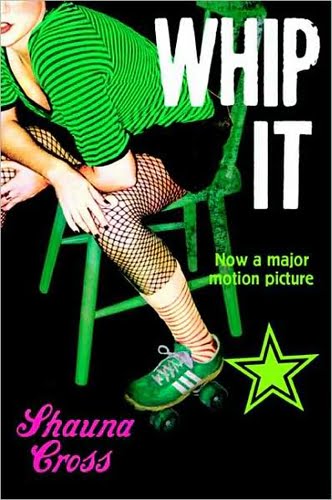
The third book was Whip It by Shauna Cross. Again the image on the cover drew her in but then she remembered that a movie was made of it and she heard the movie was good so she wanted to see what the book was like.


I also remember when I brought home Across the Universe by Beth Revis (which I purchased because of all the positive reviews I'd been reading) and Daughter Two's reaction was "Oh, I wanted to check that one out because the cover was so pretty."

Totally unscientific but it supported my belief that Covers are probably one of the biggest influencers for a teen who doesn't have a preconceived notion of what she/he wants to read when she walks into a book store. That cover may hook them but the back cover blurb might keep them hooked. Then they might check out the first page or two (at least that's what I've always counselled my kids to do if they're about to spend some hard earned cash on a book). I don't always check out the first page if a book has received fantabulous reviews but if I know nothing of the book besides what's written on the back or inside flap then I will check out the writing.

But what about the title, you ask? I always thought it was one of the things that hooked a potential teen reader more than anything. I still believe that though I have no scientific proof (or unscientific because Daughter Two only peripherally acknowledged that a title helped her in selecting her books). I know ILLEGALLY BLONDE was a title that got attention from agents and editors but have no idea if it hooks a teen reader. I do think the cover draws the eye and am hopeful that a teen will pick it up because of that and read the back cover blurb etc.

I know publishers spend a lot of time and money on getting the right cover so there must be more scientific data that confirms all the expense that goes into either getting the right stock photography, or hiring an artist or photographer to create original artwork. I wonder also, with the proliferation of e-books whether the same sensibilities will happen when browsing through e-books? My brother, not a teen mind you, but an avid iPad book user says his main determinant for buying an ebook now is the free chapter download and not cover or blurb. So the first chapter will become even more important than it already is I guess. But will teens buy e-books in the same way? Or will they browse through the covers and download the most evocative covers for them?

What do you think? Covers, title, blurb or all three?